CI/CD Pipelines: How Modern Teams Deliver Software Faster

11 Min 20 Nov, 2025

By Vetted Outsource Editorial Team

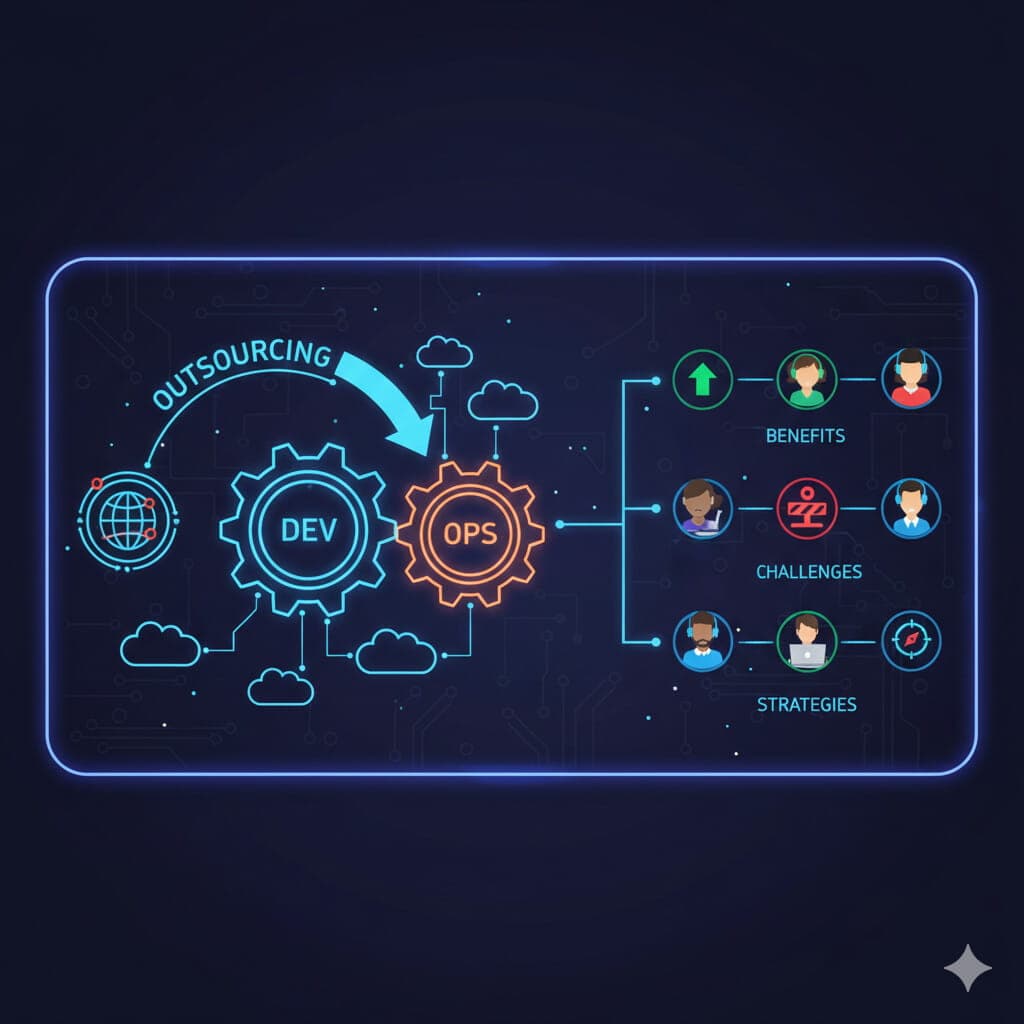
Abstract visualization of a CI/CD pipeline: Continuous glowing lines flow through geometric blocks on a dark background

CI/CD pipelines are the backbone of modern software delivery. They automate builds, testing, and deployments so teams ship updates faster and with fewer errors. Instead of relying on manual handoffs or improvised release steps, a CI/CD pipeline creates a predictable path from code to production.

The result is measurable: fewer regressions, shorter cycle times, and higher confidence in every change.

What Is a CI/CD Pipeline?

A CI/CD pipeline is an automated workflow that triggers whenever code changes. It runs builds, executes tests, performs security checks, packages artifacts, and prepares deployments. This removes the variability of manual execution and ensures every commit is validated through the same repeatable process. The pipeline becomes a quality gate, a delivery engine, and a risk-reduction mechanism.

Core components include:

  • Code integration
  • Automated testing
  • Security and vulnerability scanning
  • Artifact creation and storage
  • Deployment and rollback rules

CI/CD pipelines enforce clarity, stability, and consistency across the entire development lifecycle.

CI/CD in DevOps

CI/CD in DevOps connects engineering and operations through one automated flow. Both sides work within shared rules, shared environments, and shared signals. This removes friction caused by inconsistent deployments or unclear ownership. When CI/CD becomes the execution layer of DevOps, supported by structured practices such as those used in our own DevOps services, teams gain predictable release patterns and fewer environment issues.

DevOps teams rely on CI/CD to:

  • Reduce integration conflicts
  • Align testing and deployment standards
  • Increase release frequency without instability
  • Improve recovery time during failures

CI/CD is the mechanical engine behind DevOps execution.

For a deeper view on how teams expand these practices, read our analysis on scaling DevOps and the patterns that support sustainable growth.

CI/CD Meaning and the Delivery Model Behind It

CI/CD represents a unified delivery model:

  • Continuous Integration (CI) merges code frequently and validates it through automated builds and tests.
  • Continuous Delivery (CD) ensures every successful integration results in a build ready for deployment.
  • Continuous Deployment automates the final step, pushing all validated changes to production.

Together, they convert software releases from manual, unpredictable tasks into controlled operational flows.

Continuous Integration Pipeline

A continuous integration pipeline establishes a stable baseline for every code change. The goal is to detect issues early so they never snowball into major failures. This short validation layer reduces rework and keeps the shared codebase safe.

Typical CI steps include:

Repository checkout and dependency installation

  • Build validation
  • Unit and integration tests
  • Code style enforcement
  • Static analysis for defects or anti-patterns

Fast feedback determines whether CI becomes a trusted part of daily work.

Continuous Delivery Pipeline

A continuous delivery pipeline ensures every tested build can move through environments without manual intervention. With CD, deployment paths become predictable and repeatable, lowering operational risk and eliminating human error in coordination or configuration.

A mature CD pipeline includes:

  • Environment validation
  • Standardized configuration and secrets
  • Deployment previews
  • Artifact promotion rules
  • Rollback procedures

CD makes releases routine instead of stressful.

CI/CD Automation

CI/CD automation removes human variation by defining pipelines as code. Every step becomes transparent, version-controlled, and reviewable. This lets teams scale without losing control of their release process.

Automation supports:

  • Scheduled pipeline runs
  • Parallel testing
  • Build caching
  • Integration with cloud and container systems
  • On-demand deployment triggers

Automation ensures the same rules apply on every run.

CI/CD Testing

Testing is the quality backbone of CI/CD. Automated tests validate behavior and prevent regressions from reaching customers. Comprehensive testing increases release confidence and reduces post-deployment incidents.

Common testing layers include:

  • Unit tests
  • API and integration tests
  • Contract tests
  • Security and dependency scans
  • Performance tests

Testing maturity is often supported by specialized teams. See how dedicated QA expertise strengthens CI/CD pipelines.

The CI/CD Process From Commit to Production

A stable CI/CD process follows a predictable path. This structure removes ambiguity and provides clarity for developers, operations, and product teams.

Typical workflow:

  • Developer commits code
  • CI builds and runs fast tests
  • Integration and API tests validate dependencies
  • Security scans detect vulnerabilities
  • Artifact packages are created
  • Staging deployment validates configuration
  • CD promotes a release candidate
  • Monitoring and rollback logic activate

This path reduces manual coordination and operational risk.

Industry Data on CI/CD Adoption in 2025

Recent industry data reinforces these patterns. According to the 2025 Global Software Outsourcing Rates and Trends Guide by Accelerance, organizations that adopt structured CI/CD pipelines report higher delivery accuracy, faster execution cycles, and fewer environment-related failures across modern engineering workflows.

Checklist: How to Structure a Reliable CI/CD Pipeline

A reliable CI/CD pipeline depends on clear planning and disciplined implementation. Many teams rush into tools before defining environments or workflows, which creates long-term instability. A short planning phase prevents pipeline debt and forms a stable operational baseline.

Plan before implementation:

These steps ensure alignment and reduce rework.

  • Define environments
  • Map build steps
  • Set promotion rules
  • Choose compatible tools

Implementation should focus on speed, reproducibility, and clarity.

During implementation:

These practices keep the pipeline fast, predictable, and easy to diagnose.

  • Keep pipelines fast
  • Run tests in parallel
  • Use containers for reproducible builds
  • Add clear pipeline logs

After rollout, maintenance preserves stability and prevents long-term degradation.

After rollout:

  • Track pipeline duration
  • Identify flaky tests
  • Audit security scans
  • Standardize deployment rules

A structured checklist protects performance as systems grow.

CI/CD Tools

Tool selection determines how consistently your pipeline behaves across projects and teams. CI/CD tools must integrate cleanly with your language stack, cloud environment, and deployment model. Strong tools reduce maintenance overhead and eliminate fragmentation.

Common CI/CD tools:

  • GitHub Actions
  • GitLab CI/CD
  • Jenkins
  • CircleCI
  • Azure Pipelines
  • ArgoCD
  • Spinnaker

A cohesive toolset reduces noise and creates predictable workflows.
FAQ

Latest Trends & Insights

Discover vetted developers, proven workflows, and industry insights to help you scale faster with the right tech talent.

DevOps Outsourcing: What CTOs Need to Know Before Delegating Infrastructure

DevOps outsourcing delegates your CI/CD pipelines, infrastructure automation, and production monitoring to external specialist...

Accessibility in SDLC: Building Inclusive Software from Day One

Integrating accessibility in SDLC (Software Development Lifecycle) reduces remediation costs by 30 times compared...

AI-Powered Virtual Assistants in 2026: The Future of Business Outsourcing

The virtual assistant industry hit a turning point in 2025, transforming from basic admin...

Production Readiness Checklist for Outsourced Development Teams

Outsourcing software development has matured. Rates, locations, and tech stacks are no longer the...

Software Development Outsourcing: Complete Guide for 2026

Most software projects fail because teams run out of time, money, or the right...

Where to Find Vetted Software Developers in 2026

Finding software developers isn’t the hard part anymore. Finding good ones is. You can...

Kubernetes Deployment Strategies for DevOps Teams

Kubernetes has become the de facto standard for container orchestration across modern DevOps teams,...

DevOps Monitoring and Observability: Essential Guide for 2026

Modern DevOps teams face a critical challenge: understanding what’s happening inside increasingly complex, distributed...

How to Choose a Development Outsourcing Partner in 2026

In 2026, choosing the right development outsourcing partner can make or break a project’s...

Staff Augmentation Benefits: How to Scale Your Team in 2026

The global IT outsourcing market reached $618.13 billion in 2025 and continues expanding as...

Top Development Outsourcing Services for 2026

The landscape of development outsourcing services is experiencing unprecedented transformation as we enter 2026....

Mobile App Development Outsourcing: Cost, Scale & Quality

Outsourcing mobile app development is no longer just an option for large enterprises. Start‑ups...

Fractional CTO Services: Guide for Startups and Scaling Teams

Fractional CTO services give startups immediate access to senior technology leadership without a full-time...

Cost-Benefit of Outsourcing vs In-House Development

In-house teams carry recurring overhead: salaries, benefits, onboarding, equipment, management bandwidth. Outsourcing shifts cost...

Engineering Productivity Systems: How Modern Teams Improve Delivery

Engineering productivity is the system level ability to convert engineering effort into stable output....

CI/CD Pipelines: How Modern Teams Deliver Software Faster

CI/CD pipelines are the backbone of modern software delivery. They automate builds, testing, and...

AI Productivity Tools That Boost Speed, Quality, and Output

AI productivity tools redefine execution across development, marketing, sales, and operations. The shift is...

Software development tools that control speed, quality, and delivery

Software development tools define how fast teams move, how stable releases are, and how...

Scaling DevOps for Growth and Reliability

Scaling DevOps is the process of expanding DevOps practices across multiple teams and services...

Data Scientist vs Data Engineer: Core Differences Explained

Understanding the split between a data scientist vs data engineer is essential for any...

Data Pipeline. Design, Architecture, and Production Checklist

A solid data pipeline sustains every downstream analytics and machine learning system. It moves...

Python Multiprocessing vs Multithreading

Python multiprocessing vs multithreading is a workload decision. Use threads to mask network and...

Cybersecurity Threats: Risks, Trends, and Defenses

Cybersecurity threats evolve more rapidly than most teams can respond. Treat security as a...

Hire Software Developers Ready to Ship

Most teams waste months hiring developers who never ship. The pattern repeats: endless interviews,...

Successful Companies That Outsourced Software Development

Working with software development outsourcing companies helps teams ship sooner and smarter. The examples...

LLM Models: Practical Types, Training, and RAG

Large language models learn token patterns to predict the next token and generate text,...

Application Security Testing Services and Best Practices

Application Security Testing protects critical paths across web, API, and mobile. Treat security as...

Software Quality Assurance That Ships Reliable Releases

Software Quality Assurance is the engineering discipline that prevents defects, accelerates delivery, and protects...

AI and Data Management: How Analytics Powers Decisions

AI learns from data. Data management gives AI clean inputs, documented context, and reliable...

AI Ethics and Responsible AI in Software Development

AI now influences credit, hiring, health, and education. Ethical mistakes become real world harm....

AI industry trends: what to build next

AI industry trends shape budgets, hiring, and delivery plans. Use current evidence on adoption,...

QA Automation for Faster Releases and Fewer Bugs

QA automation accelerates releases while reducing defects. It replaces repetitive checks with stable suites...

Staff Augmentation vs Dedicated Team vs Project Outsourcing

Staff augmentation vs outsourcing is a choice about ownership and outcomes. Keep control and...

CRM Integration Blueprint for Revenue Teams

CRM integration aligns data, routing, and attribution so the pipeline moves fast and reports...

Legacy Application Modernization: Benefits and Best Practices

Legacy application modernization is a practical strategy to make your software faster, safer, and...

Outsourcing ROI Framework for Engineering Leaders

Software development outsourcing ROI is real only when delivery metrics move. Measure deployment frequency,...

Top Benefits of Outsourcing Software Development

Outsourcing software development compounds speed, quality, and flexibility. The upside grows when scope is...

Find Outsource Dev Partner

Smart outsourcing starts with the right match - we make it happen

Hi there!

Let’s find the best outsource development partner for your needs. Mind answering a few quick questions?

1/10
1
2
3

    What type of development service do you need?

    What is your project about?

    Let them explain the goal or product in 1–2 sentences.

    0/70

    Do you already have a job description or developer profile in mind?

    What is your expected timeline or deadline?

    What size of team are you looking for?

    Do you have a preference for company location or time zone?

    Would you like the vendor to provide computers or equipment for the developers?

    Which best describes your company?

    We match you with our popular partner

    We’ve Found Your Ideal Development Partner

    Complete the form to see your best‑fit partner and book a meeting

    Immediate availability

    Timezone-aligned

    Transparent pricing

    I agree to the Terms of Use & Privacy Policy